
--From Greg Kalal, certified seed grower and owner of GK Raising It Up Farm:
I used to think that if you had certified seed potatoes, you could probably get 2 years out of them before I would worry about them picking up some disease. As it has warmed up and some diseases that were never heard of in Alaska start showing up here, I have changed my mind.
Certified seed potatoes have been inspected twice during the growing season by the State Agriculture inspector and she takes virology specimens of anything questionable to be tested. She also does a storage inspection in the spring before granting tags. Without having the inspection and samples taken, it is possible that a hungry aphid or leafhopper took a “suck” of your potato plant through its stylet and transmitted a disease to it. Planting its progeny allows the disease another year to spread out and perhaps infect your neighbor’s plant—and then to a potato farmer. The last major potato disease was spread by a peach aphid. How did it get to Alaska?
The State has also started inspecting potatoes grown by people who want to replant them. Using certified potatoes is the only way to keep from having to grow potatoes like they do in the Lower ’48, i.e. “chemical warfare every couple of weeks”. Most of the big potato gurus in the Lower ’48 are warning of the end of non-GMO potatoes just because of the disease pressure and diseases that don’t initially show any manifestations.
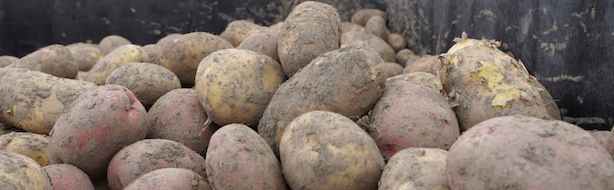
--adds Ellen VandeVisse from Good Earth Garden School:
But do read about Brendon Rockey, a commercial potato grower in Colorado. Rockey has great success with planting a diverse cover crop at the same time as he plants potatoes. He considers the cover crops as companion crops—not competitors. He also plants pollinator strips around his fields. He experiences higher yields, less input costs, more soil health, and less weed and disease pressure. He notes,
“I’ve been observing is that if I do find aphids in my potato field, they tend to be on the companion crops — the aphids actually prefer feeding off of things like the peas and the fava beans. That’s really good for me, because if an aphids even enters my field, and it has a virus in its stylet, if it can feed off of two to three other plants first, it cleans that stylet out. Now, if that aphid goes and feeds off of a potato plant, it won’t spread that virus. The aphid then doesn’t do any physical damage to the potato crop.
“Having that diversity out there, giving aphids a place to clean their stylet — if they happen to make it into my field — I think this is actually contributing greatly to our success with maintaining our seed lots.” --from ACRES Magazine June 2022